Coming Soon

Joel Zapata, Alex Hunt, Andrew Reynolds, and John Beusterien, Los Llaneros: The Mexican Southern Plains, 1500-1900. Norman: University of Oklahoma Press. 2026.
For centuries Mexican people of the plains―or los Llaneros―have inhabited and embodied the borderland region known today as the Southern Great Plains. Yet their central presence in the area is often forgotten. This diverse collection of essays brings much-needed attention to the ethnic culture and history of the Llano, the vast grassland plains encompassing the Texas Panhandle, eastern New Mexico, and corners of Colorado, Kansas, and Oklahoma.
Los Llaneros covers a broad period, beginning with the Coronado entrada of 1540 and ending in the big ranch era around 1900. It is a unique colonial history, involving Nuevomexicanos, Comanches and other Indigenous peoples, the Spanish, and Anglo-Texans. The volume is interdisciplinary in its approach, embracing archeological, folkloric, literary, and cultural knowledge. Through these multiple perspectives, Los Llaneros achieves a singular goal: counteracting a long silence―and at times silencing―of Mexican people.
Collectively the contributors to this volume make a compelling argument that this region’s ethnic history must be recovered and reinterpreted to understand fully the cultural, environmental, and racial dynamics of the Southern Plains. A timely reconsideration of an important borderland region, Los Llaneros opens new pathways for future examination of the Llano and its diverse peoples.
“These essays uncover a rich tapestry of Llano Estacado’s peoples, inter-relationships, economies, politics, art, and literature. Forgotten no more, thanks to this deeply grounded volume, the Southern Plains’ fascinating history now rests in your hands.” – Sherry L. Smith, editor of The Future of the Southern Plains
‘What a group of truly superb scholars has fashioned with Los Llaneros is no less than a re-invention of the Southern High Plains sense of self…This book provides a stunner.” – Dan Flores, New York Times bestselling author of Coyote America
John Beusterien, Transoceanic Animals as Spectacle in Early Modern Spain. Amsterdam: Amsterdam University Press, 2020. Republished by Routledge: Taylor and Francis, 2025.
Animal spectacles are vital to a holistic appreciation of Spanish culture. In Transoceanic Animals as Spectacle in Early Modern Spain, Beusterien christens five previously unnamed animals, each of which was a protagonist in a spectacle: Abada, the rhinoceros; Hawa’i, the elephant; Fuleco, the armadillo; Jarama, the bull; and Maghreb, the lion. In presenting and analyzing their stories, Beusterien enriches our understanding of the role of animals in the development of commercial theater in Spain and in the modern bullfight. He also contributes to growing scholarly conversations on the importance of Spain in the history of science by examining how animal spectacles had profound repercussions on the emergence of the modern zoo and natural history museum. Combining scholarly content analysis and pedagogical sagacity, the book has a broad appeal for scholars of the early modern Spanish Empire, animal studies scholars, and secondary and postsecondary instructors looking for engaging exercises and information for their Spanish language, culture, and history students.
“Transoceanic Animals recounts the stories of five itinerant animals who lived and died in early modern Spain. From a Brasilian armadillo whose carapace graced a cabinet of curiosities in Seville to an Indian rhinoceros who bathed in the Tagus, it reveals the multiple meanings assigned to exotic beasts and examines their shifting roles as specimen, spectacle, symbol and muse. Engaging, illuminating and sometimes harrowing, Beusterien’s book makes an important contribution to human-animal history.” – Helen Cowie, University of York, author of Llama
“This book by John Beusterien makes a lively and thought-provoking contribution to the growing field of animal studies scholarship of the early modern period. … Beusterien’s attention to these transoceanic transferences reveals important information concerning a great many aspects of contemporary culture, from the political institutions and diplomatic initiatives of the Habsburg court to the wider practices of collecting, printing, healing and, most importantly, performance… The book thus comprises a valuable contribution to environmental humanities scholarship and will undoubtedly be referred to by many researchers of early modern Spain, and indeed of animal studies in the broader sense.” – Alex Lawrence, University of Oxford, UK
“[Transoceanic Animals] brings to bear rigorous, creative research in order to carefully describe past uses and abuses of animals in a way that compels readers to consider how we can foster more compassionate, ethical relationships with animals now and in the future.” – Micah McKay, Romance Quarterly

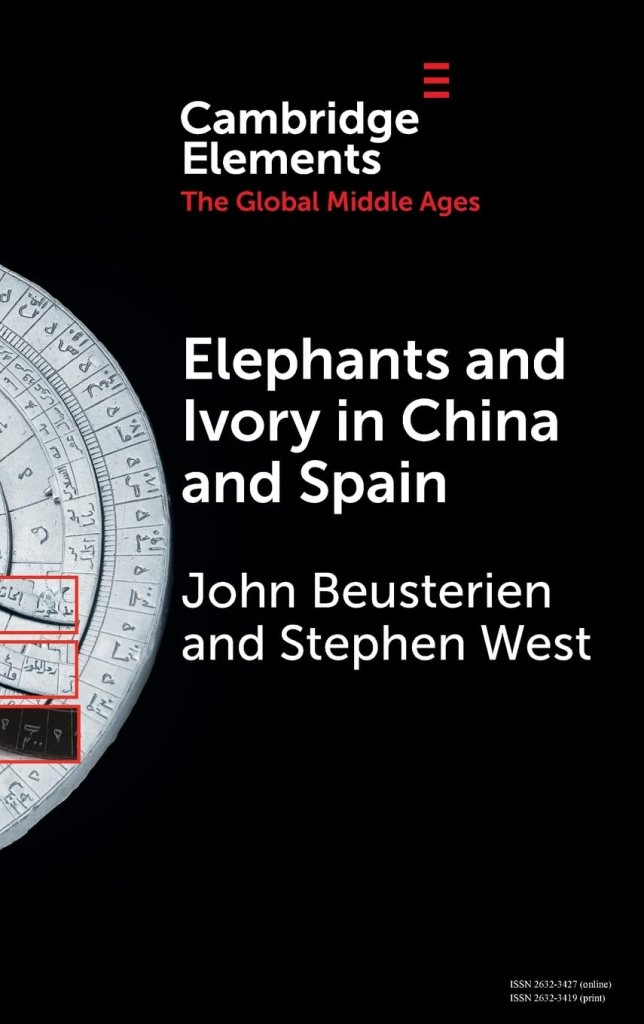
John Beusterien and Stephen West, Elephants and Ivory in China and Spain. Eds. Geraldine Heng and Susan Noakes. Cambridge Elements Series on Global Middle Ages. Cambridge: Cambridge University Press, 2025.
The Element provides a global history of ivory and elephants, acknowledging the individuality and dignity of the elephants that provided that ivory. Sections on China include the first translations of texts about the cultural importance of elephants and ivory in the Song Dynasty (960–1279) and an examination of an ivory stave (huban 笏板), crafted from an Asian elephant tusk (Elephas maximus), carried by officials in court and other formal rituals. Sections on Spain examine the value of ivory during the reign of King Alfonso X of Castille (1221–1284) and the Virxe Abrideira (ca. 1260–1275), an ivory Virgin and Child statuette owned by Queen Violante of Aragon (1236–1301), crafted from an African elephant tusk (Loxodonta africana). The Element concludes by offering a pedagogy from a comparative literature perspective about Sunjata (c.1226), an epic from the Mali empire in West Africa, an important source for thirteenth-century global ivory markets.
“Elephants and Ivory in China and Spain provides a global history of the ivory and elephant trade, while acknowledging the individuality and dignity of the animals. This book will satisfy both academics and non-academics interested in animal studies, and Eurasian and African studies… Elephants and Ivory in China and Spain establishes a model for scholarly collaboration in fields such as Chinese literature and medieval/early modern Iberian cultural studies.” –Juan Pable Gil-Osle and Rachel Junlei Zhang
- Listen to the interview on The Medieval Podcast
- Watch a video abstract here: https://vimeo.com/1028745141
- Watch here John Beusterien approach the Monastery-Museum in Allariz (Spain) that holds the elephant ivory statuette featured in Elephants and Ivory in Spain and China.
- Observe here close up images of the Spanish elephant ivory statuette featured in Elephants and Ivory in Spain and China
John Beusterien, Canines in Cervantes and Velázquez: An Animal Studies Reading of Early Modern Spain. Aldershot: Ashgate Publishing, 2012. Republished by Routledge: Taylor and Francis, 2016.
The study of the creation of canine breeds in early modern Europe, especially Spain, illustrates the different constructs against which notions of human identity were forged. This book is the first comprehensive history of early modern Spanish dogs and it evaluates how two of Spain’s most celebrated and canonical cultural figures of this period, the artist Diego Velázquez and the author Miguel de Cervantes, radically question humankind’s sixteenth-century anthropocentric self-fashioning. In general, this study illuminates how Animal Studies can offer new perspectives to understanding Hispanism, giving readers a fresh approach to the historical, literary and artistic complexity of early modern Spain.
Classified as ‘Research Essential’ by Baker & Taylor YBP Library Services, “Canines in Cervantes and Velázquez successfully plots a new line of cultural analysis for early modern Iberian Studies … this book makes an important contribution to the field and fully merits the reader’s attention.” –Bulletin of Hispanic Studies

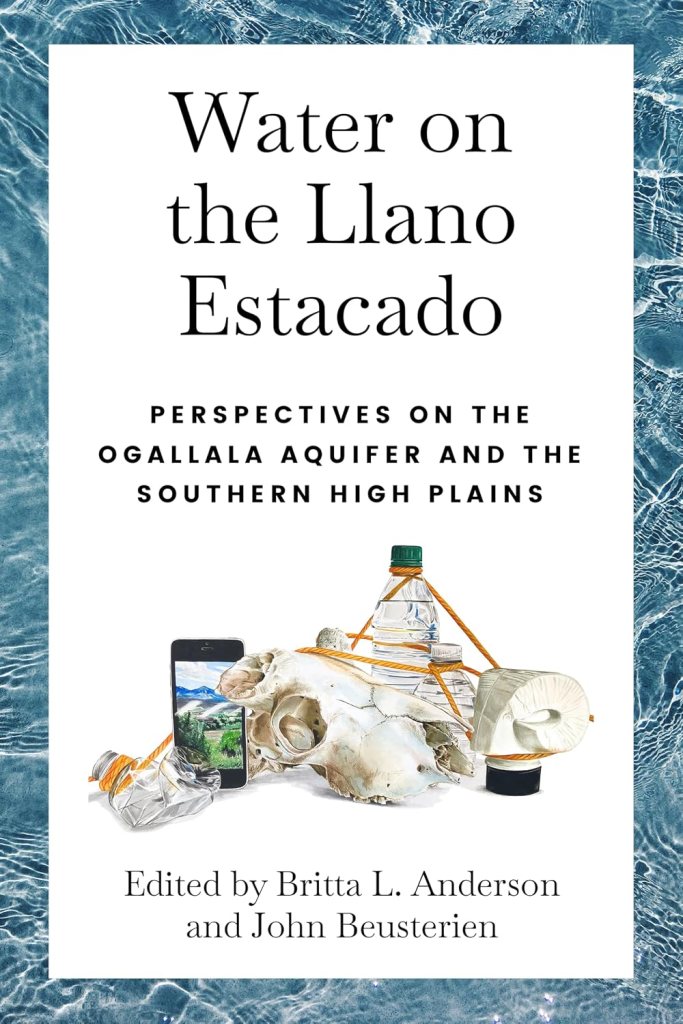
Water on the Llano Estacado offers a comprehensive, interdisciplinary investigation into the precarious relationship between human civilization and the vital water resources of the Southern High Plains. Centered on the Llano Estacado―a vast, semiarid plateau spanning parts of Texas and New Mexico―this volume addresses the looming crisis of the Ogallala Aquifer’s depletion.
By bridging the gap between the sciences, legal scholarship, and the environmental humanities, editors John Beusterien and Britta Anderson assemble a diverse cohort that explore the region’s water. Authors include educators, scientists, land managers, writers, artists, and generational residents, as well as a former director of city planning for Lubbock and the director of the Center for Water Law and Policy at Texas Tech University School of Law. Their contributions value local embodied and lived knowledge.
The collection moves from the deep time of geological formations to the urgent legal and technical challenges of the twenty-first century. Contributors examine provocative theoretical frameworks such as Water Gaia, which posits the Earth as a living aquifer, alongside rigorous histories of the Ogallala Formation and the ecological drying of significant sites like Blackwater Draw. The chapters interrogate the complexities of Texas water law and policy and the potential for technological innovation, such as the identification of new water sources through desalination processes. Readers will be taken into a history of water in the region with regard to geology, ancient animals, and peoples. Equally important and resonant are the included perspectives from visual art, literature, music, photography, and poetry.
In its entirety, Water on the Llano Estacado presents the region’s water not only as a commodity but as an entity inextricably and mutually bound to humanity. The collection underscores that collaborative and creative thinking are necessary for inventive solutions for using, caring for, defining, and envisioning water for overcoming the challenge of future crises.
Scholarly and accessible, this work provides a necessary road map for understanding groundwater in one of North America’s most hydrologically sensitive regions, making it an essential resource for researchers in environmental history, geography, and natural resource policy, as well as those invested in the management of a sustainable water future for the landscape of the Southern High Plains.
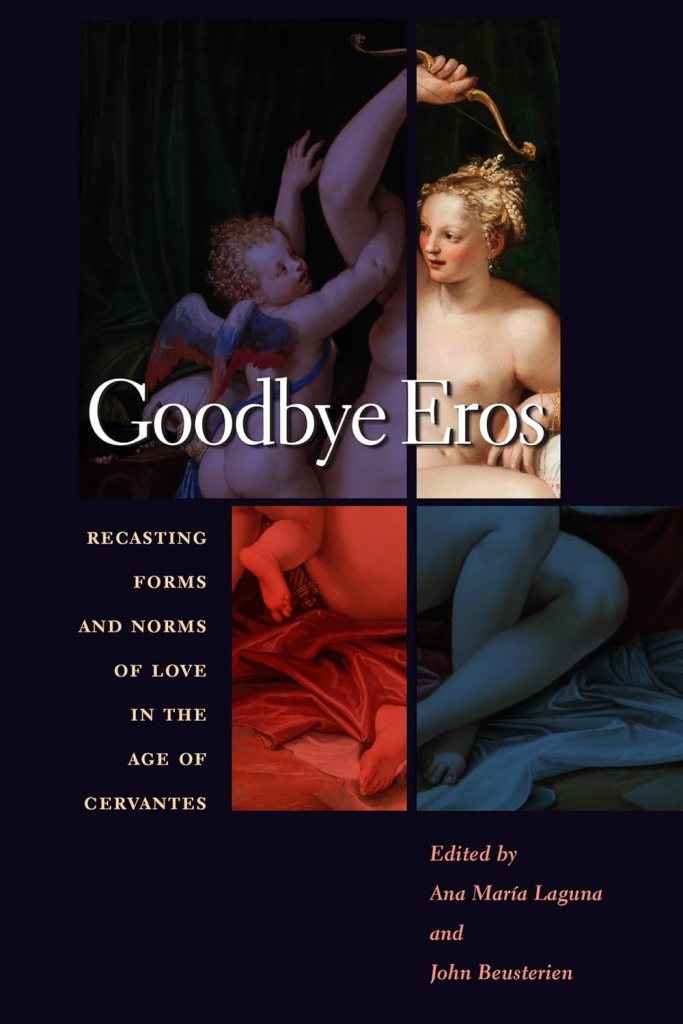
Ana Laguna and John Beusterien, Goodbye Eros: Reassessing the Ethos of Love in Age of Cervantes. Toronto: University of Toronto Press, 2020.
Traditional Petrarchan and Neoplatonic paradigms of love started to show clear signs of inadequacy and exhaustion in the sixteenth century. How did the Spanish Golden Age recast worn out discourses of love and make them compelling again? This volume explores how Spanish letters recognized that old love paradigms, especially the crisis of the subject, presented an extraordinary opportunity for revising traditional literary strictures. As a result, during Spain’s nascent modernity, literature took up the challenge to expand existing forms of desire and subjectivity.
A range of scholars show how canonical and non-canonical Golden Age writers like Miguel de Cervantes, Diego Hurtado de Mendoza, Francisco de Quevedo, Luis de Góngora, Lope de Vega, and Francisco de la Torre y Sevil became equal agents of the sweeping ontological reconfiguration of the idea of eros that defined their culture. Such reconfiguration includes: the troubling displacement of “self” and “other” seen in sentimental genres like the pastoral or romance; the overlapping of emotions such as love and jealousy characteristic of the baroque lyric and dramatic production; and the conflation of axioms such as eros and eris prevalent in contemporaneous epic experiments.
In uniting the findings of often surprising texts, the collection of essays in Goodbye Eros takes a pioneering look at how Golden Age moral, ideological, scientific, and literary discourses intersected to create fascinating re-elaborations of the trope of love.
“The gallery of case studies that Goodbye Eros offers not only provides a comprehensive review of the literature of early modernity, but also an expansion of research into love and eroticism in unprecedented ways.” Esther Fernández, Cervantes: Bulletin of the Cervantes Society of America
“Goodbye Eros is a captivating volume to which we must return again and again.” –Frederick A. de Armas, University of Toronto Quarterly

John Beusterien, An Eye on Race: Perspectives from Theater in Imperial Spain. Lewisburg: Bucknell University Press, 2006. 228 pages.
In the seventeenth century two theaters were constructed in Madrid any were built not only in urban centers across the Iberian Peninsula, but also in the colonial territories of America. A national theater is crucial for understanding Spain’s march into modernity, especially with respect to one of modernity’s most criticized legacies: race. This study argues that comprehending and disassembling race in the contemporary West must take into account its manifestation in theater in imperial Spain.
Cultural and literary critics, historians, anthropologists, and sociologists who study race will welcome this provocative and cogent contribution. In particular, scholars in Hispanic Studies will appreciate John Beusterien’s exhaustive research of original sources and his fresh approach to the period.
“There is no question that this polemical work will energize discussions on how to study the culture of imperial Spain… Beusterien has produced a pioneering work that will trigger much discussion.”–Frederick A. de Armas, Andrew W. Mellon Professor, University of Chicago
“This is a major work of research and scholarship, unique and compelling in its argument.” E. H. Friedman, Vanderbilt University, in Choice (premier review journal for academic libraries)
John Beusterien, El prodigio de Etiopía de Lope de Vega. Vilagarcía de Arousa, Mirabel Editorial, 2005.
“El tercer ejemplar de la colección “Biblioteca de Theatralia” de la editorial Mirabel está dedicado a esta poco conocida comedia del Fénix de los ingenios que, a pesar de su lugar secundario en el canon dramático, contiene aspectos de sumo interés para el lector contemporáneo … Ilumina facetas apenas estudiadas en las diferentes actitudes del español de la época con comunidades africanas residentes en la Península … esta compacta introducción crítica cumple con su propósito, abriendo las puertas al lector a las cuitas de los Filipos, Teodoras y Alejandros de esta entretenida comedia.”
Enrique García Santo-Tómas, University of Michigan
“La edición del profesor John Beusterien hace disponible tanto al estudioso como al público en general una de las obras teatrales fundamentales sobre la presencia del negro en la literatura española del Siglo de Oro.” – Javier Irigoyen García, Afro-Hispanic Review

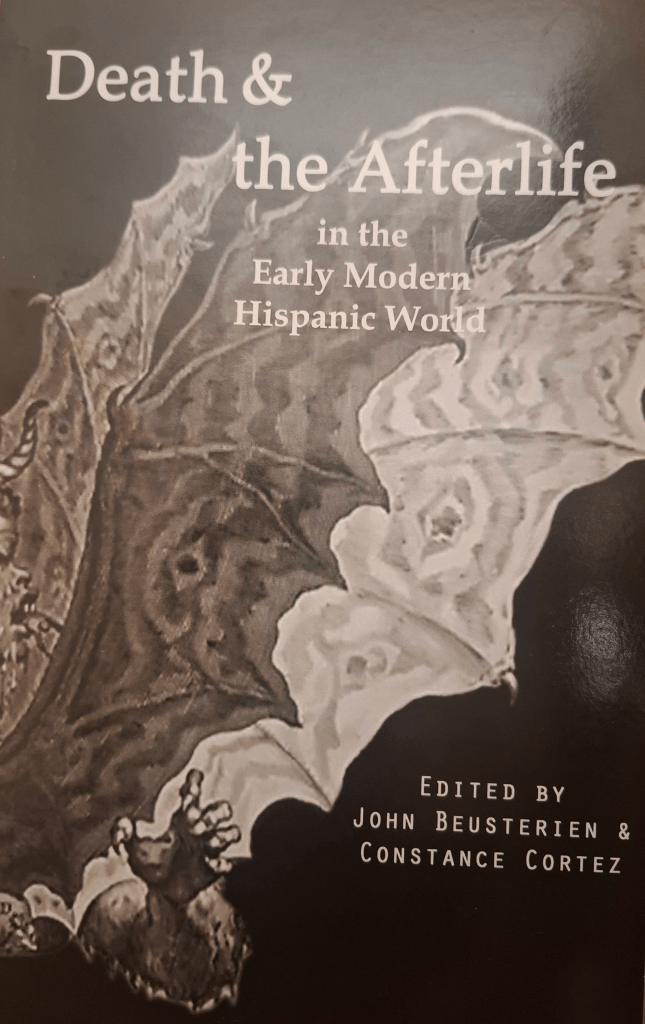
John Beusterien and Conny Cortez, Death and Afterlife: The Case of the Early Modern Hispanic World. University of Minnesota Press: Hispanic Issues On Line, 2010.
“The essays [in Death and Afterlife] will also provoke because they move toward an increasing differentiation of the concepts of “death” and the “afterlife” in this baggy Hispanic world of early modernity. They do so by attending carefully to the different registers designated by the verbs on which I open—“understanding” and “thinking about” death and the afterlife, “remembering” and “grieving,” and “celebrating” the dead… these essays will be of interest because they help us to ask this question: what does the Hispanic world’s understanding of death and the afterlife contribute to our understanding, in broad terms, of modernization (i.e. secularization, state-formation, technological shifts, etc.)?” –Jacques Lezra, University California Riverside, distinguished professor
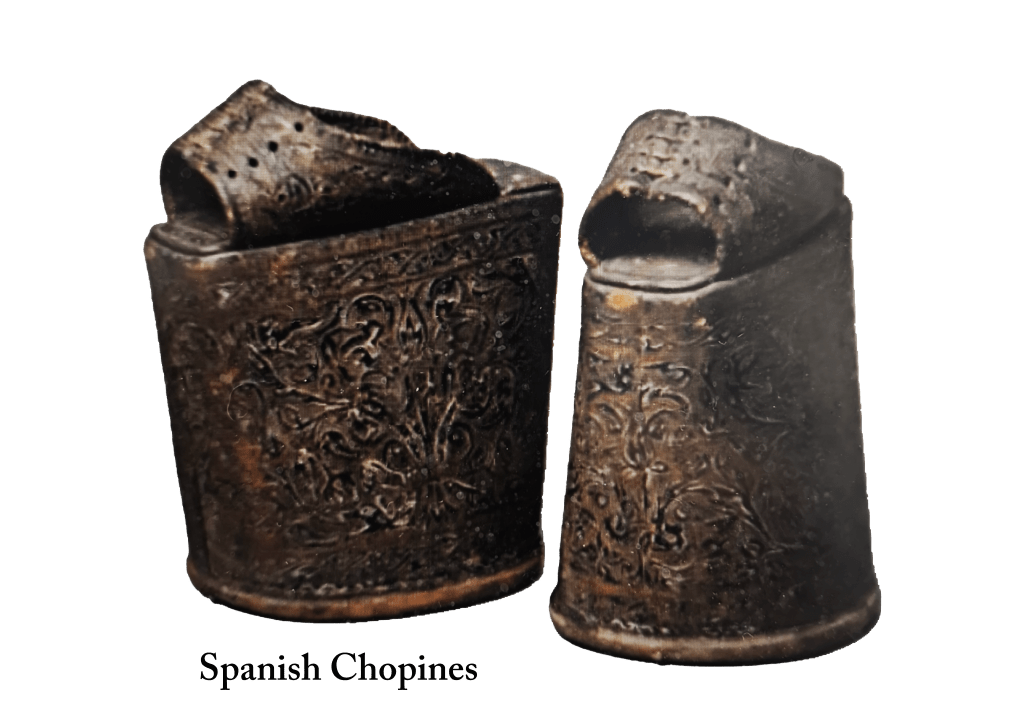
Noelia Cirnigliaro and John Beusterien, Touching the Ground: Female Footwear in the Early Modern Hispanic World. Special issue of Journal of Spanish Cultural Studies. London: Routledge. 14.2. 2013.
“Footwear in the Iberian context is explored through historical and trans-Mediterranean connections, through analogies with architecture in theater and moralizing texts, in the trans-Atlantic context of Peru, and through its disruptive potential in theatrical cross-dressing. As a means of expressing how early moderns care for things, the shoe, as John Beusterien’s essay concludes, is ‘a thing that constantly points out of itself.’ … In terms of currency, theoretical sophistication, methodological interest, and global perspective, this collection has it all.” – 2014 Best Collaborative Project, Society of the Study of Early Modern Women & Gender